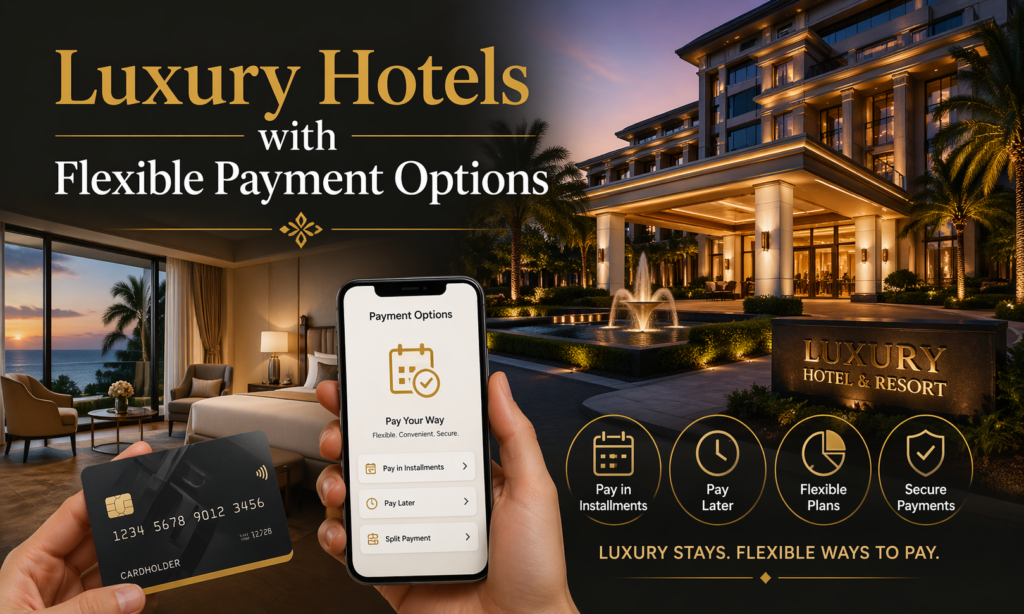
Why Flexible Payment Matters in Luxury Travel
Luxury travel used to signal one thing: pay a large amount upfront, confirm the reservation, and move on. That model still exists, but it is no longer the only one that works. The modern luxury guest is more digitally fluent, more price-aware, and much more strategic about when money leaves the account. Even affluent travelers do not always want to tie up a large sum in a hotel booking months before arrival, especially when that trip also includes business-class flights, private transfers, fine dining, spa packages, local guides, and shopping. In other words, the question is no longer just, “Is this suite worth it?” The better question is, “What is the smartest way to pay for this suite?” That mindset explains why luxury hotels with flexible payment options are gaining attention across search behavior, travel platforms, and hotel commerce systems. KAYAK’s 2026 report shows payment flexibility is influencing actual trip volume for younger travelers, while Expedia and Booking.com continue to build payment experiences that support staged payment rather than one rigid checkout path.
There is also a regional angle that matters. In Indonesia, Xendit reported a 9.5% increase in virtual account transactions in the travel sector between 2023 and 2025, reflecting a broader shift toward digital payment behavior. That does not only affect budget travelers. It influences expectations across the market, including premium travel. Once consumers get used to flexible digital payments in one part of travel, they expect the same ease when booking a luxury resort, a city hotel, or a high-end wellness retreat. Payment flexibility has become part of the service experience itself. It feels a bit like a luxury lobby: if the check-in is frictionless, the guest feels cared for right away. If payment is awkward, rigid, or confusing, the experience starts with tension instead of confidence.
What Flexible Payment Options Actually Mean
The phrase flexible payment options sounds simple, but in the hotel world it can mean several different things. First, there is the classic reserve now, pay later model. This usually means a traveler secures a room today with a card guarantee but does not get charged immediately. Booking.com prominently markets this approach to consumers through “book now, pay at the property,” and Hyatt’s terms confirm that reservations are generally guaranteed by a valid major credit card or another hotel-approved payment form, such as an advance deposit. Hilton also explains that guests can pay for stays online and through Hilton reservations using major credit or debit cards and Hilton Honors Points, while some in-stay payment methods vary by market, such as WeChat and Alipay in China. That tells us something useful: hotel payment flexibility is real, but it is not standardized. Each brand, property, rate type, and region may handle timing and payment channels differently.
Second, there is installment-based payment, often described as buy now, pay later or pay over time. This is becoming more common through travel intermediaries and payment partners. Booking.com’s partner documentation states that its payment ecosystem supports Klarna, Affirm, and PayPal Credit for buy now, pay later flexibility.
How Major Travel Brands Are Adapting
If you want to understand where the luxury hotel market is heading, look at the booking infrastructure around it. Online travel platforms are doing a lot of the early normalization work. Booking.com has created a consumer expectation around pay at the property, while also telling hotel partners that its payment stack can support financing options like Klarna and Affirm. Expedia is doing something similar with Affirm-backed vacation payment plans. These systems matter because many luxury travelers begin their research on large travel platforms even when they eventually complete the booking elsewhere. Once travelers see flexible checkout options on major sites, they start expecting the same convenience on direct hotel websites. That expectation can quietly shape conversion rates, even in the upper end of the market.
Hotel groups themselves are moving at different speeds. Some global chains still center their own booking flow around card guarantees, points, deposits, or prepaid rate plans rather than installment-heavy direct checkout. Hyatt’s payment and reservation policies show a structure built around reservation guarantees and rate-specific terms. Hilton explains accepted payment methods clearly, including market-specific payment rails in China. Marriott continues to use both direct booking and prepaid promotional logic. Put simply, the luxury hotel payment landscape is a patchwork, not a single highway. That is why travelers searching for the best luxury hotels with flexible payment options should look beyond the property name and examine the exact rate rules, cancellation window, deposit requirement, and checkout payment choices. A hotel brand may be luxurious across every property, but the payment flexibility can differ dramatically by country, offer type, and booking channel.
The Best Benefits of Flexible Payment for Luxury Hotel Guests
(Luxury Hotels) The most obvious benefit is cash flow control, but that is only the beginning. A flexible payment structure lets travelers distribute expenses in a way that supports a better overall trip. Imagine booking a luxury resort six months in advance. If you do not have to pay the full amount immediately, you can keep liquidity available for airfare timing, visa fees, travel insurance, airport transfers, restaurant reservations, or last-minute upgrades. That creates a smoother travel budget and often a better experience. For premium travelers, flexible payment can be the difference between booking a standard room and confidently choosing the suite with club access, ocean views, or private plunge pool. It is not always about affordability in the basic sense. Sometimes it is about optimizing spending across the full journey. Expedia’s continued investment in pay-over-time travel and Booking.com’s support for flexible payment products both point toward this exact consumer behavior.
(Luxury Hotels) There is also a planning advantage. Peak-season luxury inventory moves fast. The best villas, top-category suites, and signature rooms often disappear long before arrival dates. A flexible payment model lets travelers secure those high-demand stays earlier without feeling like they just dropped a financial anchor into the sea. That matters even more in 2026 because luxury demand remains strong. Flywire’s survey shows high spending intent among luxury travelers, which means premium inventory will stay competitive. A flexible booking structure helps guests act quickly when they find the right property, instead of hesitating because the immediate payment feels too heavy. In a market where timing can decide whether you get the signature suite or the leftovers, payment flexibility becomes a strategic booking tool, not just a convenience feature.
A Quick Comparison of Common Luxury Hotel Payment Models
| Payment model | How it works | Best for | Main trade-off |
|---|---|---|---|
| Book now, pay at property | Room is reserved now, payment is taken later at check-in or check-out | Travelers who want flexibility before arrival | Cancellation or no-show penalties may still apply |
| Installments / BNPL | Cost is split into scheduled payments through a provider like Affirm or Klarna | Travelers who want smoother budgeting | Terms, approval, and protections vary |
| Advance purchase / prepaid | Pay upfront in exchange for a discounted rate | Travelers with firm plans who want better value | Often less refundable or non-refundable |
| Deposit-based booking | Pay part now and the rest later | Longer-stay or higher-value reservations | Deposit rules vary by property and rate |
This comparison matters because the “best” payment option depends on the traveler’s real priorities. If flexibility is everything, pay at property may feel safest. If monthly budgeting matters most, installments can make premium travel easier to manage. That the trip dates are locked and savings matter, prepaid luxury hotel deals can deliver better rates. The key is not choosing the flashiest payment label. The key is matching the structure to your trip risk, cancellation confidence, and cash strategy. Official hotel and OTA policies make one thing clear: the headline offer never tells the full story by itself. You have to read the rate rules.
The Hidden Risks Travelers Should Watch (Luxury Hotels)
Flexible payment sounds relaxing, but it can hide sharp edges if you are careless. The first issue is cancellation policy mismatch. A traveler may love the idea of paying later or paying in installments, but the reservation itself may still carry strict cancellation windows, no-show penalties, or partial refund limits. That means payment flexibility does not always equal booking flexibility. A hotel might let you reserve today without immediate full payment, yet still charge a penalty if you cancel too close to arrival. A prepaid discounted rate can look attractive until your travel dates change and the rate turns out to be non-refundable. This is where smart travelers separate marketing language from actual booking conditions. Think of it like a luxury car lease: the monthly number might look elegant, but the real cost lives in the terms. Hyatt’s and Hilton’s policies both reinforce that hotel payment handling depends on reservation type and accepted forms of payment, while OTA-led financing introduces yet another layer of terms from the payment provider.
The second issue is consumer protection and financial discipline. A 2025 report in The Guardian highlighted concerns that travelers using BNPL for holiday purchases may miss protections associated with some traditional credit card arrangements, and it noted tighter UK BNPL regulation is scheduled from July 2026. That does not mean flexible payment is bad.
How to Choose the Right Luxury Hotel Payment Option (Luxury Hotels)
Choosing the right payment setup is not difficult, but it requires a calm, strategic approach. Start with the booking purpose. Is this a honeymoon, a business trip, a wellness retreat, or a special family stay? If the dates are fixed and highly unlikely to change, a prepaid luxury hotel rate may offer the best value. Marriott’s prepay-and-save style promotions are a good example of how early commitment can translate into savings. If your dates are still fluid, a reserve now, pay later model may be smarter, even if the nightly rate is slightly higher. That extra flexibility can be worth more than the discount if plans shift. If you are booking a more expensive itinerary and want to preserve cash for other parts of the trip, an installment plan through a trusted provider on a major platform may fit better. Booking.com’s and Expedia’s official payment frameworks show how these options are now part of mainstream travel booking behavior, not fringe experiments.
Then look at the details that actually matter. Check whether the booking is fully refundable, partially refundable, or non-refundable. Confirm when the card is charged. Review whether the payment provider charges interest or simply splits the amount. Compare booking direct versus booking through an OTA, because the room may be the same while the payment terms are completely different. If you are booking internationally, pay attention to accepted local payment methods and currency handling. Hilton’s documentation, for example, notes region-specific payment methods in China, while Indonesia’s digital payment growth shows how local payment preferences keep evolving. A smart traveler treats the payment page like part of the room selection process. The suite may be glamorous, but the payment structure is what decides whether the stay feels smooth before arrival, during the trip, and after checkout.
Conclusion (Luxury Hotels)
The rise of luxury hotels with flexible payment options is not a passing gimmick. It reflects a broader shift in travel behavior, digital checkout expectations, and the way modern guests evaluate value. Travelers still want premium service, exceptional design, memorable dining, and world-class locations. They just do not want an outdated payment experience standing in the middle like a velvet rope. Current market signals show that payment flexibility now influences trip planning, especially among younger travelers, while luxury travel demand itself remains strong. That combination creates a clear opportunity for hotels, resorts, and booking platforms that make payment simpler, more transparent, and more adaptable.